
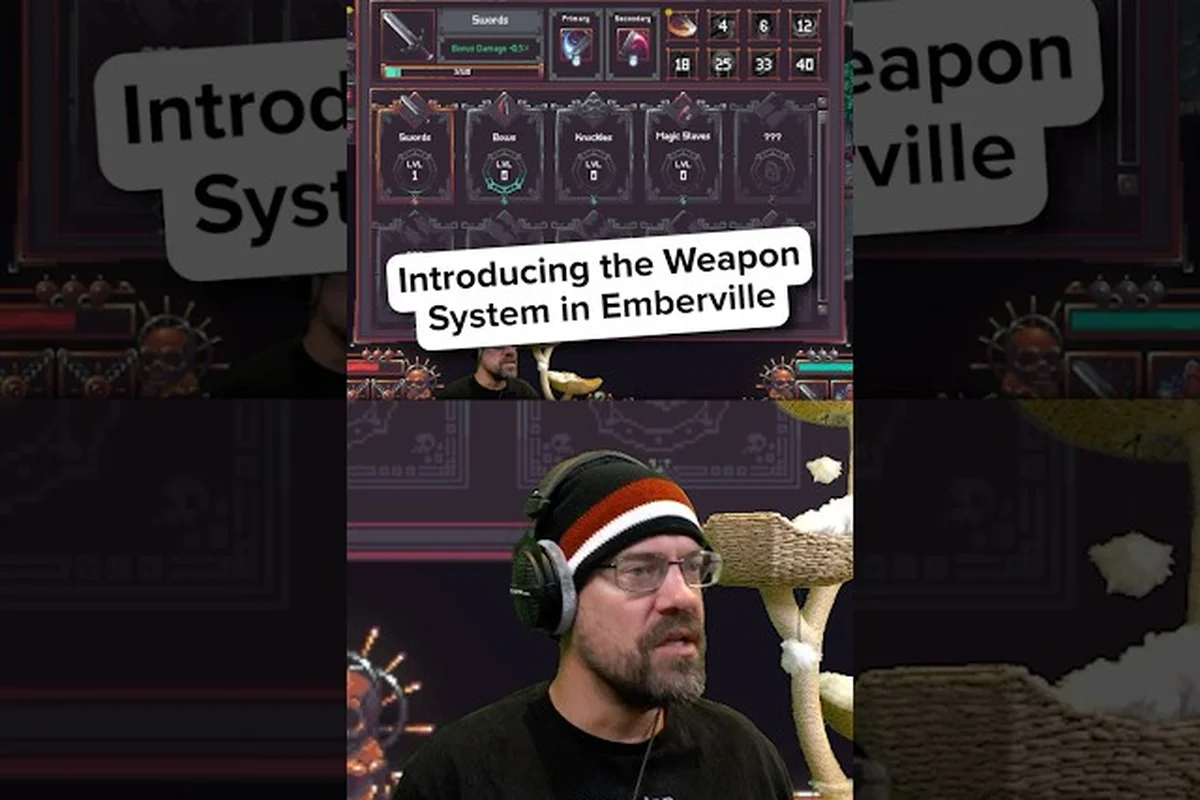
A solo-ready Emberville weapon build revolves around the game's two-button, weapon-bound combo system layered on top of an inherited multi-class skill tree, which means your weapon choice and your active class determine your damage profile rather than raw stat grinding. According to the Convergence Showcase Trailer, combat is built on unlocking per-weapon combos, chaining attack types, and borrowing skills from other classes to tailor a personal playstyle, so the loadout you carry into the Vitromotus is the single biggest lever for solo survivability. This guide walks through how to assemble an Emberville solo build from the moment you wake up in the dungeon through late-game boss farming, with concrete stat priorities, class pairings, and weapon upgrade paths for each phase.
Emberville Weapon Build Foundations and Core Mechanics
Before picking a weapon, you need to understand what actually drives damage in Emberville. The game does not lean on a traditional passive stat tree — instead, your offensive output comes from three layered systems: the weapon you equip, the active combat class you are currently playing, and the borrowed skills you have inherited from leveling alternate classes. Because the active class gates which combos are executable, an Emberville class build is really a class+weapon pair, not a class or a weapon in isolation.
How the Two-Button Combo System Works
Emberville's combat is described by its developers as a "simple-yet-deep" two-button system where each weapon defines a unique combo string. Pressing the primary attack button chains your weapon's three- or four-hit sequence, while the secondary button triggers class-specific skills that consume mana or stamina. Different weapons have different combo finishers, so switching from a sword to a hammer completely changes your opener and recovery frames. According to the most recent gameplay reveal from Terminals, the system rewards players who learn to weave their different attack types together so each finisher lands harder, which is why weapon mastery matters more than raw level for solo players.
Inherited Skills and Multi-Class Synergy
The second pillar of any Emberville weapon build is the inherited skill system. Leveling a non-active class still grants you access to a small pool of that class's utility and passive skills, and you can mix-and-match those inheritances onto any active class. This means a Knight-active build can borrow a Mage's shield buff or a Ranger's mobility dash without losing the Knight's combo access. The trick for a solo build is to pick one active class for your main weapon combos and treat the other classes as stat and skill donors rather than loadouts you actually swap into mid-fight.
Stat Priorities and Where Damage Actually Comes From
Emberville does not publish a single canonical stat sheet, so most of the priority data here is drawn from community testing on the prologue demo and the most recent GCX convention build. The three stats that matter most for a solo weapon build are Weapon Power, Attack Speed, and Stamina Efficiency, in roughly that order during early game. Stamina Efficiency becomes less critical once you have inherited a few passive skills from utility classes, because those passives tend to flatten the stamina curve. Crit and elemental damage modifiers start to show up on late-game weapons, but only after you have a base combo you can actually execute without running dry.
| Stat | Early Game Priority | Mid Game Priority | Late Game Priority | Source of Investment |
|---|---|---|---|---|
| Weapon Power | High | High | High | Weapon upgrades, blacksmith |
| Attack Speed | Medium | Medium | High | Inherited Ranger passives, weapon traits |
| Stamina Efficiency | High | Medium | Low | Inherited utility class skills |
| Crit Chance | Low | Medium | High | Late-game weapon affixes, rings |
| Elemental Damage | None | Low | High | Late-game weapons, dungeon mods |
Emberville Early Game Build Path
The early game in Emberville is brutal for solo players because you start with no estate upgrades, limited crafting stations, and a single basic weapon. Your Emberville early game build should optimize for stamina economy and combo reliability rather than damage ceiling, because dying to a Vitromotus trash mob and losing your loot is the real progression bottleneck. Since your starting class dictates whether that early stamina budget goes to evasion frames, ranged poke damage, or a defensive parry timing, double-check our breakdown of the Emberville Starting Class before you commit, because dying to a Vitromotus trash mob and losing your loot is the real progression bottleneck.
Starting Weapon Choices and Why a Sword Wins
The first weapon you find is usually a basic sword or a basic hammer, and community data from the prologue demo strongly favors the sword for solo play. The sword's combo string is shorter, has faster recovery frames, and its finisher applies a brief stagger that buys you breathing room against groups. Hammers hit harder per swing but punish stamina mistakes more harshly, which is risky before you have inherited any stamina recovery passives. If the dungeon offers a weapon choice chest in the first area, take the sword and save any hammers you find for a future mid-game build experiment.
Active Class Recommendation: Knight for Beginners
For a first Emberville solo build, run Knight as your active class through the early game. Knight combos are forgiving — every finisher applies either a block frame or a small AoE stagger — and Knight inherits well from both Warrior (stamina) and Mage (shield). Pairing Knight-active with a sword mainhand and a basic shield offhand gives you the most consistent damage and the cleanest escape windows, which is what you actually need while you are still learning enemy tells.
Inherited Skill Priorities (Levels 1-15)
Spend your first fifteen class levels in this order: ten levels in Knight for combo upgrades, then three to four levels in Warrior for Battle Endurance (stamina-on-hit) and one to two levels in Ranger for Quick Step (a short dodge with iframes). According to the official class overview, this three-class mix is the cheapest way to get a functional solo kit without spreading your levels too thin.
| Level Range | Class to Level | Key Skill Gained | Why It Matters |
|---|---|---|---|
| 1-10 | Knight | Combo Finishers, Block Stance | Reliable core damage and defense |
| 11-13 | Warrior | Battle Endurance | Stamina refund on every hit lands |
| 14-15 | Ranger | Quick Step | Dodge with i-frames for boss telegraphs |
Emberville Mid Game Build Path
Once you unlock the estate and start placing crafting stations — typically around the time you complete your first full dungeon clear — the mid game opens up. Your Emberville mid game build is where stat priorities start to diverge based on weapon type, and you can begin experimenting with class swaps without completely restarting your progression. This is also when weapons with elemental affixes start dropping, so your loadout decisions get more interesting than "sword or hammer."
Weapon Upgrade Path and the Blacksmith Tier System
The estate's blacksmith can upgrade any weapon up to five tiers, and each tier adds a small stat boost plus a chance to roll an affix. According to community testing reported on the Emberville subreddit, the optimal mid-game strategy is to upgrade your main weapon to tier 3 before considering a replacement, because tier 3 is the first tier where affix rolls become meaningful. Below tier 3, the damage difference between upgraded and un-upgraded weapons is smaller than the difference between weapon types, so a tier 1 hammer is still worse than a base sword for a solo build that has not yet invested in hammer-specific combos.
Mid-Game Class Pairings Worth Testing
The mid game is where you can branch out of the Knight-active comfort zone. Three pairings consistently perform well in solo play according to community data:
-
Knight-active / Warrior-secondary — the safe mid-game build, focused on stamina sustain and consistent combo execution. Best against groups of trash mobs.
-
Ranger-active / Knight-secondary — switches your mainhand to a bow or dual daggers and inherits Knight's shield passive for clutch survivability. Best against single-target bosses with long attack animations.
-
Mage-active / Warrior-secondary — uses a staff as your main weapon and inherits Warrior's stamina passives to keep spell chains going. Best in dungeons with elemental weakness floors, but requires more careful stamina management.
| Class Pairing | Main Weapon | Strength | Weakness |
|---|---|---|---|
| Knight + Warrior | Sword + Shield | Tanky, stamina-rich | Lower burst damage ceiling |
| Ranger + Knight | Bow or Daggers | Boss damage, mobility | Fragile against groups |
| Mage + Warrior | Staff | Elemental burst, AoE | Stamina-hungry, slow opener |
Stat Priority Shift in the Mid Game
By the time you hit level 25-30, your stat priorities should rotate. Attack Speed becomes more valuable because your combo strings are longer, and Crit Chance starts to matter on weapons that roll crit affixes. Stamina Efficiency is still useful but less critical than it was in the early game, because Warrior inheritance at level 15+ usually covers your sustain needs. Players building an Emberville solo build around a mage staff should still respect stamina economy, but Knight or Ranger mains can safely start dumping those investment points into raw damage stats.
Emberville Late Game Build Path
Late game in Emberville starts roughly when your estate is fully upgraded and you can consistently clear the deeper Vitromotus floors. At this point, your Emberville late game build should be optimized around boss farming and dungeon modifier stacking, because the loot treadmill is what carries your progression forward. This is also where your weapon choice starts to matter more than your active class, because late-game weapons have unique combo modifiers that no class skill can fully replicate.
Late-Game Weapon Tiers and Target Affixes
Late-game weapons fall into three rough tiers, based on community data from the GCX playable demo and the Steam Early Access previews. Standard Refined weapons are the floor — reliable but capped. Essence-Forged weapons are the upgrade that most solo players target, because they roll two affixes instead of one. Void-Touched weapons are the rare drops that everyone chases, with three affixes and a unique combo modifier that changes one hit in the weapon's string.
| Weapon Tier | Affix Slots | Combo Modifier | Drop Source |
|---|---|---|---|
| Standard Refined | 1 | None | Blacksmith tier 4-5, dungeon chests |
| Essence-Forged | 2 | None | Boss drops, deep Vitromotus floors |
| Void-Touched | 3 | Yes (1 hit changed) | Rare boss drops, dungeon modifiers |
When chasing an Emberville weapon build for late-game boss farming, prioritize an Essence-Forged weapon with a Crit Affix and an Elemental Damage Affix matching the boss's weakness. The combo modifier on Void-Touched weapons is a luxury that only matters if you have already optimized the rest of your build, because the modifier is wasted on a player who has not mastered the weapon's base string.
Late-Game Stat Priority and the Crit Threshold
By late game, your stat priorities should be weapon power, then crit, then attack speed, then everything else. Crit becomes a top priority because late-game boss health pools are so large that damage variance matters more than average damage. According to community testing reported by players who participated in the GCX demo, the practical crit threshold is around 30% — below that, crit rolls feel inconsistent, and above that, the scaling tapers off because most late-game enemies have diminishing returns on crit damage taken.
Boss-Specific Loadout Swaps
Late-game Emberville encourages you to keep two or three weapons ready in your inventory rather than committing to a single mainhand. The two-button combo system means swapping weapons does not lock you out of any class skills, so a smart solo player keeps a sword for trash, a hammer for staggered bosses, and a staff for elemental-weakness floors. This loadout-swapping playstyle is also why the inherited skill system is so powerful: you can level three classes for their inheritances and still play the active class that matches your current weapon without losing utility.
Frequently Asked Questions
What is the best weapon build for solo play in Emberville?
For a solo Emberville weapon build, start with a sword as your mainhand and Knight as your active class, because the sword's combo string has the shortest recovery and Knight's finishers provide reliable staggers. Upgrade the sword to tier 3 at the estate blacksmith before chasing any rare weapon drops, and inherit stamina passives from Warrior plus a dodge skill from Ranger to round out your solo kit.
When should I switch from early game to mid game weapons in Emberville?
The transition usually happens around level 20-25, after your first full dungeon clear and once the estate blacksmith is unlocked. At that point, stop investing in starter weapons and start chasing Essence-Forged drops from boss kills. According to community testing, weapons below tier 3 upgrade are not worth the smithing materials once mid-game alternatives are available.
Can I run a magic-focused Emberville class build as a solo player?
Yes, but magic builds are more stamina-hungry than melee builds and require tighter execution. Run Mage as your active class with a staff mainhand, inherit Battle Endurance from Warrior, and always keep at least one melee weapon in your inventory for boss phases where you cannot afford to whiff a spell. The official class overview confirms that borrowing skills from Warrior or Knight is the standard way to make a solo Mage build viable.
What is the best stat priority for an Emberville late game build?
Late-game stat priority is weapon power first, crit chance second (target 30%), and attack speed third. Elemental damage modifiers become important on Void-Touched weapons, but only after you have optimized your base stats and inherited skills. According to community data, players who chase elemental affixes before hitting the crit threshold underperform on boss damage compared to players who stack raw crit.
Do I need to level every class for a complete Emberville solo build?
No, you only need to level classes whose skills you want to inherit, not every class in the game. A typical solo build levels three classes: one active class for combos, plus two donor classes whose key utility skills you borrow. Spreading your levels across four or more classes dilutes your core combo progression and is the most common mistake reported by players who struggle with mid-game solo content.