
Weapons
Emberville weapons guide: how weapon categories level, how weapon-bound combo chains unlock, and how to chain attack types for the heavy finisher that converts an opening into damage.
Introduction
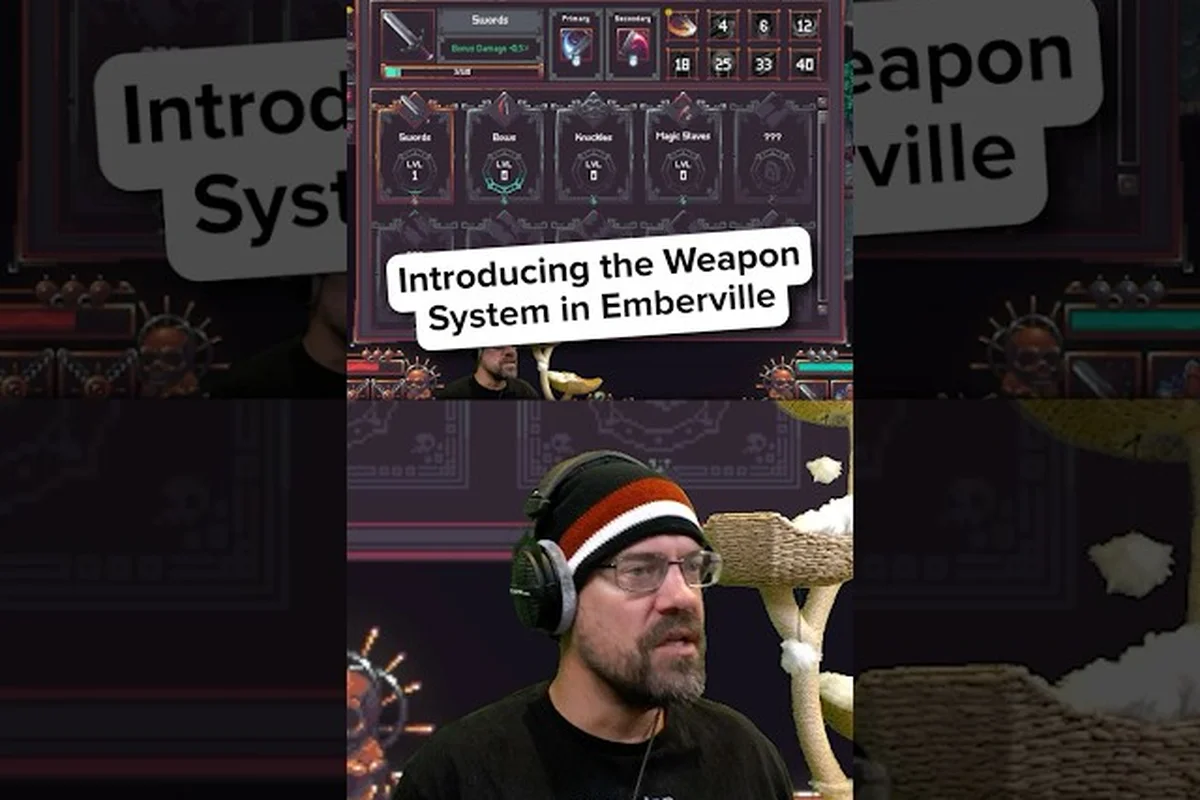
Weapons in Emberville are move sets, not stat sticks. Each weapon category carries its own unlockable combo chain that sits on top of the shared two-button combat foundation, and switching gear changes which strings you can perform rather than only changing your damage numbers. That design decision ripples through the whole game. Because combos are bound to the weapon in hand, the first meaningful decision in any build is not which class to run but what you want to hold while you fight. It also means weapon categories double as progression tracks: levelling a family of weapons contributes to opening further classes, so time spent learning a new weapon type feeds back into the class system. Cygnus Cross has described a combat loop where different attack types are meant to be linked together, with a heavier strike as the payoff once a chain lands cleanly. Learning that rhythm is the difference between mashing and fighting.
Weapon Progression Snapshot
| Element | How It Works | Player Impact |
|---|---|---|
| Weapon categories | Each family is levelled by fighting with it | Feeds class unlocks, so testing weapons advances your roster |
| Bound combos | Unique chains are tied to the weapon in hand | Switching gear changes your available strings, not just damage |
| Chain attacks | Different attack types are linked in sequence | A clean chain ends in a heavier strike worth setting up |
| Armor categories | Level in parallel with weapon families | Contribute to opening further class options |
| Upgrades | Improved through leveling, items and villager trades | Keeps an early favourite viable deeper into a run |
Weapon Tracks
Weapon Categories
Each family is its own progression line
Bound Combos
Your string list follows the weapon
Chain Attacks
Link attack types for a heavier payoff
Armor Categories
The parallel defensive track
Loot & Upgrades
Keep an early favourite viable
Core Mechanics
The combat foundation is deliberately simple: a two-button base that anyone can pick up in a minute. The depth arrives above it, through weapon-bound combos and the linking of different attack types. Because the base is shallow, the skill expression lives in knowing your current string, recognising which attack opens a punish window, and choosing the moment to commit to a heavier finisher rather than a safe hit. Weapon categories also level independently, and that level contributes toward unlocking classes, so a player who spends a weekend testing spears or bows is not diverting from progression but feeding it. Armor categories run in parallel and contribute in the same direction. Upgrades come from leveling, items and the trades taught by villagers you bring back to town, which ties weapon improvement back into the rescue and crafting loop instead of leaving it isolated in combat.
Advantages
The best thing about weapon-bound combos is that they make experimentation cheap and meaningful at the same time. Picking up a different weapon genuinely changes how you play, because your available strings change with it, yet the underlying two-button foundation means you are never relearning the game from scratch. That combination is rare: most action RPGs either keep every weapon functionally similar or gate variety behind a full respec. Here the variety is in your hands from the start, and the upgrade path back to relevance is short because villager trades and crafting feed directly into weapon improvement. Category levelling also means no weapon is a dead end. Every hour spent with a family you end up disliking still pushes a progression track that opens classes, so a failed experiment pays a dividend even when the weapon itself does not suit you.
Challenges
The main risk is shallow familiarity. Because swapping weapons changes your entire string list, a player who constantly switches can end up competent with nothing and fluent in nothing, losing to enemies they would beat with a single well-learned kit. Committing long enough to internalise one weapon's chain timings is usually worth more than collecting variety early. There is also a genuine information gap: Cygnus Cross has discussed weapon categories and bound combos as concepts, but has not published a full weapon list, so any guide claiming to rank specific named weapons is inventing detail. Early Access balance adds a second layer of uncertainty, because tuning changes can shift which families feel rewarding. Treat what you read as method rather than verdict, and let your own testing settle the specifics.
Frequently Asked Questions
What are weapon-bound combos in Emberville?+
How do I unlock new combos for a weapon?+
Should I switch weapons often or stick to one?+
Quick Tips
Learn what your current chain costs in time before using it on a boss. Every string has a commitment window, and the enemies that kill new players are the ones that punish a heavy attack started at the wrong moment. Practise the chain on ordinary creatures until you can feel when it is safe.
Spend a session with a weapon you have never touched, even if you hate it. The two-button foundation means the learning cost is low, the category level feeds class unlocks, and the spacing habits you pick up will improve your main weapon more than another hour of grinding it. Keep the experiment honest by giving the unfamiliar weapon a full session, since a chain that feels wrong for ten minutes often clicks once the timing settles.
Keep a crafted consumable that boosts your offence in reserve specifically for boss attempts. Weapon upgrades raise your ceiling, but a damage item lets you convert one clean punish window into a finished fight, which is how you stop long encounters from going wrong at the end. Weapon upgrades raise the ceiling of every run, but a consumable is what converts one good opening into a finished fight before a boss recovers.
Featured

Emberville Legendary Weapons: Drops, Farming, and Spawns
Hunt the rarest blades in the Vitromotus with this Emberville legendary weapons guide covering drop sources, farming routes, and which finds are worth chasing.
Emberville Weapon Bound Combos: List, Unlocks, and Beginner Picks
Unlock and chain Emberville weapon bound combos with this full list of inputs, unlock conditions, and the strongest sword and axe picks for new players.
Emberville Weapon Guide: Every Weapon Type and Category Explained
Browse the full Emberville weapon guide covering all weapon types, from swords to axes, with stats, category strengths, and the best pairings for your build.
All Articles

Emberville Weapon Stats: Damage, Scaling, and DPS
Compare raw damage, attack speed, and scaling curves across every weapon type in this Emberville weapon stats breakdown so you can pick the highest-DPS loadout.
Emberville Armor Upgrades: Tier Materials and Best Pieces
Reinforce every gear piece the smart way with this Emberville armor upgrades guide covering material costs, level thresholds, and what to upgrade first.
Emberville Spear Guide: Moveset, Reach, and Builds
Master the Emberville spear guide with full reach analysis, combo inputs, and the one-handed builds that turn its speed into a Vitromotus boss-killer.

Emberville Weapon Upgrades: Forging Path and Damage Gains
Power up every blade with this Emberville weapon upgrades guide covering tier materials, mastery thresholds, and which weapons to invest in first for the Vitromotus.