
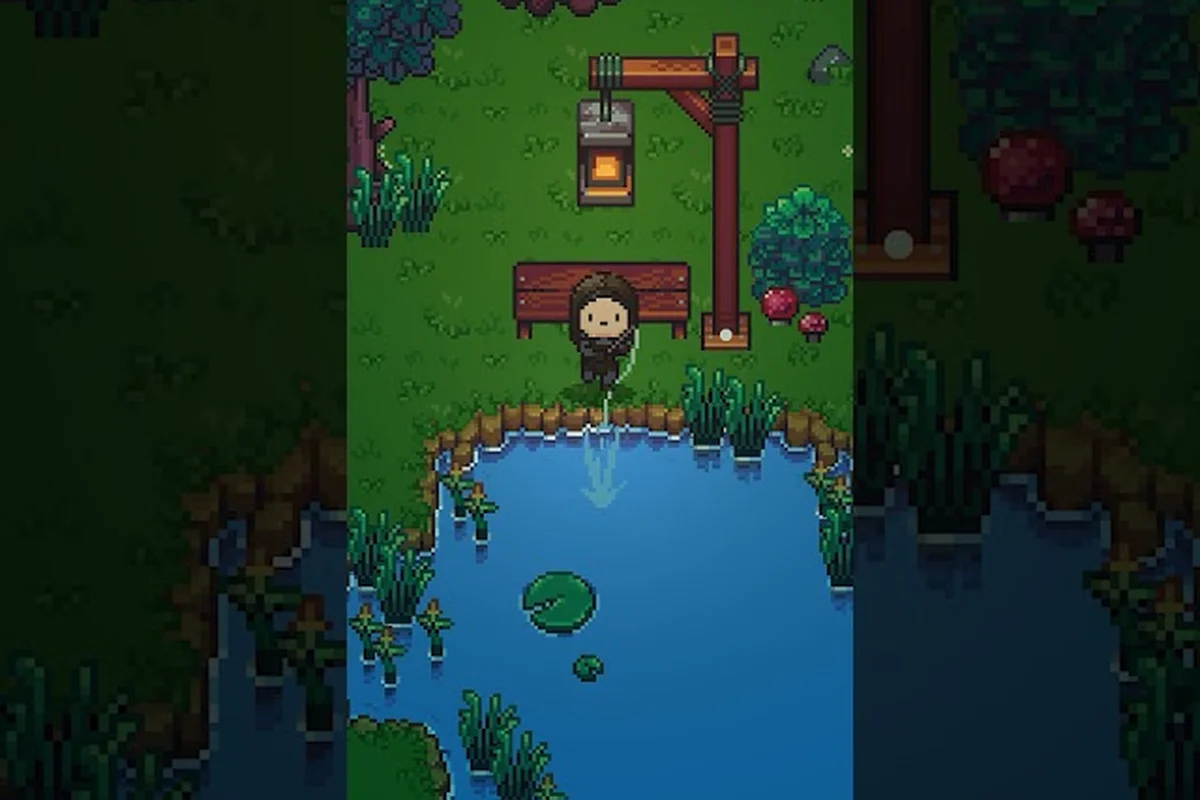
The Vitromotus remembers every creature that crawls through its corridors, and Emberville enemy lore ties each monster back to the region where it evolved. Understanding the bestiary in context helps new arrivals to the ruined town predict threats, identify rare spawn conditions, and piece together why the underground world devours its explorers in the first place.
The Vitromotus and the Roots of the Bestiary
Emberville world lore starts with a single truth: the Vitromotus is a living magical dungeon, and every creature inside it carries a fragment of that purpose. According to the official Steam news hub, death no longer lasts inside the Vitromotus, which means the ecosystem evolved to recycle bodies rather than let them rest. Creatures that fall are reforged by ambient energy, mutated by exposure to Kymia residue, or simply absorbed into the dungeon's growing memory.
That recycling loop explains why the enemy roster of Emberville regions feels both familiar and slightly wrong on every expedition. A rat-like scavenger you cleared in the upper tunnels may return with glowing veins and a new attack pattern after you respawn at your estate, because the Vitromotus treats the encounter as a draft rather than a finished chapter.
| Origin Category | How It Enters the Vitromotus | Common Mutation Trigger |
|---|---|---|
| Surface Wildlife | Wandered through sinkholes after the cataclysm | Prolonged Kymia exposure |
| Failed Rescues | Villagers who died before the player arrived | Dungeon energy recycling |
| Magical Experiments | Constructed by an unknown creator for unknown ends | Direct enchantment overload |
| Echoes | Spectral remnants bound to a death location | Unresolved emotional imprint |
The four origin categories above cover almost every enemy type you will catalog. Community reports from the public demo at GCX (Universal Orlando Resort, July 24-25) confirmed that each origin tag influences the loot table as much as the creature's behavior, which is why Emberville biomes feel like curated dioramas rather than random mob spawns.
Emberville Biomes and Their Native Threats
The underground world divides into discrete Emberville biomes, and each one favors a different branch of the bestiary. When you read the Emberville biome list alongside your in-game map, the visual cues (fungal growth, crystal veins, ash deposits) double as a predator index. The table below cross-references the four documented Emberville areas with the enemy families that dominate each.
| Biome | Visual Signature | Dominant Enemy Family | Primary Lore Hook |
|---|---|---|---|
| Hollow Threshold | Cracked stone, dim torchlight | Shamblers, Dust Wisps | First contact with dungeon memory |
| Gloomroot Hollow | Bioluminescent fungi | Sporekin, Rot Crawlers | Failed rescue echoes |
| Kymia Veins | Pulsing crystal seams | Vein Attendants, Glasshowlers | Magical experiment residue |
| Ashfall Depths | Ember rain, scorched air | Cinderbound, Ash Wolves | Surface cataclysm survivors |
The Hollow Threshold sits just below the estate and serves as the tutorial layer. Shamblers there are slow, telegraphed, and forgiving, because the Vitromotus is still measuring the new player. Dust Wisps float between the cracks, and lore scraps scattered in the level imply they are the residual grief of refugees who never made it to the surface.
Gloomroot Hollow introduces the Sporekin, mushroom-headed humanoids that throw volatile pods and try to herd the player toward the Rot Crawlers. Community testers reported that both species appear on the same aggro range, which encourages you to break line of sight before engaging either group. The Sporekin are believed to be mutated villagers, which fits Emberville enemy lore themes about the dungeon rewriting its inhabitants.
Kymia Veins swap fungi for crystal, and the enemies here are faster, more aggressive, and tied to the magical experiments origin. Vein Attendants patrol corridors with lantern-like cores, while Glasshowlers hang from the ceiling and shatter when struck. Their glass death animation drops shards that can be crafted into weapons back at the estate, which makes clearing a room feel like an economic decision rather than pure combat.
Ashfall Depths close the current loop with Cinderbound knights and Ash Wolves. The lore fragments here lean toward the surface cataclysm, suggesting that some Emberville regions predate the Vitromotus itself and that the dungeon grew downward into a world that was already burning.
Reading the Bestiary Through Emberville Map Geography
The Emberville map is more than a navigation tool, because each Emberville map zone encodes creature behavior into its layout. Long, straight corridors favor ranged enemies like Dust Wisps and Glasshowlers, while cramped, vertical chambers funnel the player into melee fights with Shamblers and Cinderbound. Studying the geometry before you engage helps you choose the right class loadout for the encounter ahead.
| Map Feature | Enemy Behavior It Suggests | Tactical Implication |
|---|---|---|
| Narrow chokepoints | Ambush predators (Cinderbound, Ash Wolves) | Bring a shield or dodge class |
| Open fungal floors | Sporekin herd formations | Use area attacks to scatter the pod chain |
| Crystal atriums | Glasshowler ceiling drops | Clear ceilings first with a vertical strike |
| Ash-buried ruins | Echoes of failed rescues | Listen for audio cues before committing |
Echoes deserve special attention. They are translucent silhouettes that do not attack, and they repeat one animation from a moment of their past life. Community data suggests that finding three Echoes in the same Emberville area unlocks a side quest that explains who they were, which gives the dungeon a quiet emotional weight that pure combat-focused crawlers rarely achieve.
Emberville map design also supports multi-class experimentation. According to the developer showcase, every weapon in the game carries a combo system, and learning skills from leveling multiple classes lets you tailor the active combat class for unique playstyles. When you cross-reference a biome's enemy roster with the combos you have unlocked, you start to plan routes through the Emberville regions that minimize the toughest matchups.
Lore Tiers: From Trash Mobs to Named Foes
Emberville enemy lore uses a three-tier hierarchy that helps you prioritize which fights actually matter for the story. Trash mobs populate the corridors and provide resources; elite variants guard loot rooms and miniboss arenas; and named foes anchor quest lines and regional lore reveals.
| Tier | Identifying Traits | Lore Role | Recommended Preparation |
|---|---|---|---|
| Trash | Low health, predictable patterns | Worldbuilding texture | Standard class build |
| Elite | Glowing eyes, named attack, mini cutscene | Biome capstone | One combo rotation practiced |
| Named | Title above health bar, unique music | Regional or story arc capstone | Full class kit, healing consumables |
A useful community-sourced heuristic: if the enemy has a title above its health bar, the fight doubles as a lore cutscene. Skipping or rushing these encounters costs you Emberville world context, because the named foes carry the only dialogue that explains why their Emberville area exists in its current state.
The same heuristic applies to Emberville regions at the macro scale. Each region has a named apex threat that you cannot progress past without learning its lore, which is why the developers route the main quest through a chain of named encounters rather than a flood of random elites.
Connecting Enemy Origins to Quest Progression
Quests in Emberville are not bolted onto the dungeon, because they grow out of the same roots as the enemy roster. When you rescue a villager who was trapped in Gloomroot Hollow, their gratitude quest sends you back to the same biome to clear Sporekin infestations that have spread since the rescue. The quest chain becomes a way to study how Emberville biomes react to player intervention.
| Quest Trigger | Returning Enemy Type | Lore Insight Unlocked |
|---|---|---|
| Rescue a villager | Mutated former villager variant | The Vitromotus absorbs memories |
| Recover a relic | Vein Attendant ambush | Kymia was a containment failure |
| Investigate ruins | Cinderbound patrol | The surface cataclysm reached the dungeon |
| Follow an Echo | Echo convergence event | The dungeon records grief |
This loop is what makes Emberville enemy lore feel like an actual bestiary instead of a stat dump. Each quest completion adds a line to your codex, and the codex entries cross-reference Emberville areas with the creatures that inhabit them, which makes the Emberville zones article an excellent companion read while you fill out the collection.
Players who enjoy optimization should treat the codex as a checklist, because every entry also flags a rare spawn condition. A common community tip is to revisit Emberville biomes at different times of the in-game day cycle, since some elite variants only appear when the ambient light matches their origin event.
Practical Strategies for the Lore Hunter
Treating Emberville enemy lore as a tracking project changes how you approach each run. Instead of clearing a room and moving on, you pause to note the enemy's position relative to the Emberville map, any visual cues that mark its origin category, and whether an Echo or named variant might be hiding nearby.
A short field routine for new players:
-
Scan the room for visual origin markers (fungi, crystal, ash) before engaging.
-
Note any translucent figures or repeated animations, which signal Echoes.
-
Check the ceiling and narrow corridors for ambush archetypes (Glasshowlers, Ash Wolves).
-
After combat, open the codex and log the new entry along with the Emberville area name.
-
Cross-reference the entry with the quest log to see if a follow-up encounter is unlocked.
The loop above takes roughly thirty seconds per room once you build the habit, and it pays off in faster codex completion and better-prepared elite fights. If you prefer a more structured approach, the Emberville map guide breaks the dungeon into quest-by-quest checkpoints that align naturally with the lore-hunting routine.
| Player Archetype | Lore Hunting Focus | Suggested Class Bias |
|---|---|---|
| Completionist | Echoes + named variants | Mobility class with vertical reach |
| Speedrunner | Skipping trash, hunting elites | Burst damage class |
| Story-focused | Reading every scroll, then fighting | Hybrid class with area control |
| Resource grinder | Trash mob density routes | AoE class with sustain |
The four archetypes above are not mutually exclusive, and most Emberville players mix elements from each. The important takeaway is that Emberville enemy lore rewards attention, and a player who treats the codex as a core progression system rather than a side activity will notice biome-specific patterns much earlier than a player who only fights to advance.
Frequently Asked Questions
What is the fastest way to start filling the Emberville bestiary?
Focus on the Hollow Threshold first, because the enemies there are slow and the Emberville map layout is linear. Each Shambler and Dust Wisp you log gives a codex entry that hints at the next biome's roster, so early progress compounds quickly.
Do all Emberville biomes share the same enemy origins?
No. Each biome favors one or two origin categories, and the visual signature of the region (fungi, crystal, ash) tells you which family to expect before you engage. Cross-referencing the visual signature with your codex unlocks prediction bonuses on the first attack of each encounter.
Are named enemies required to progress the main quest?
Yes. Every regional apex foe is tied to a quest gate, and skipping a named fight will block your access to the next Emberville region. The codex marks these encounters with a title above the health bar and a unique music track.
Can Echoes be missed permanently?
Community testing suggests that Echoes respawn after the in-game day cycle resets, so a missed Echo is rarely permanent. However, the side quest that triggers after collecting three Echoes in one area is one-time only, so it is worth planning a sweep of each Emberville area before moving on.
How does Emberville enemy lore connect to the rebuilding mechanics?
Several codex entries describe how the Vitromotus absorbs the memories of fallen creatures, and the rebuilding mechanics let you reclaim those memories as blueprints and crafting materials. This loop is what makes the game's "farm and fight" pitch feel coherent, because both halves feed the same lore system.