
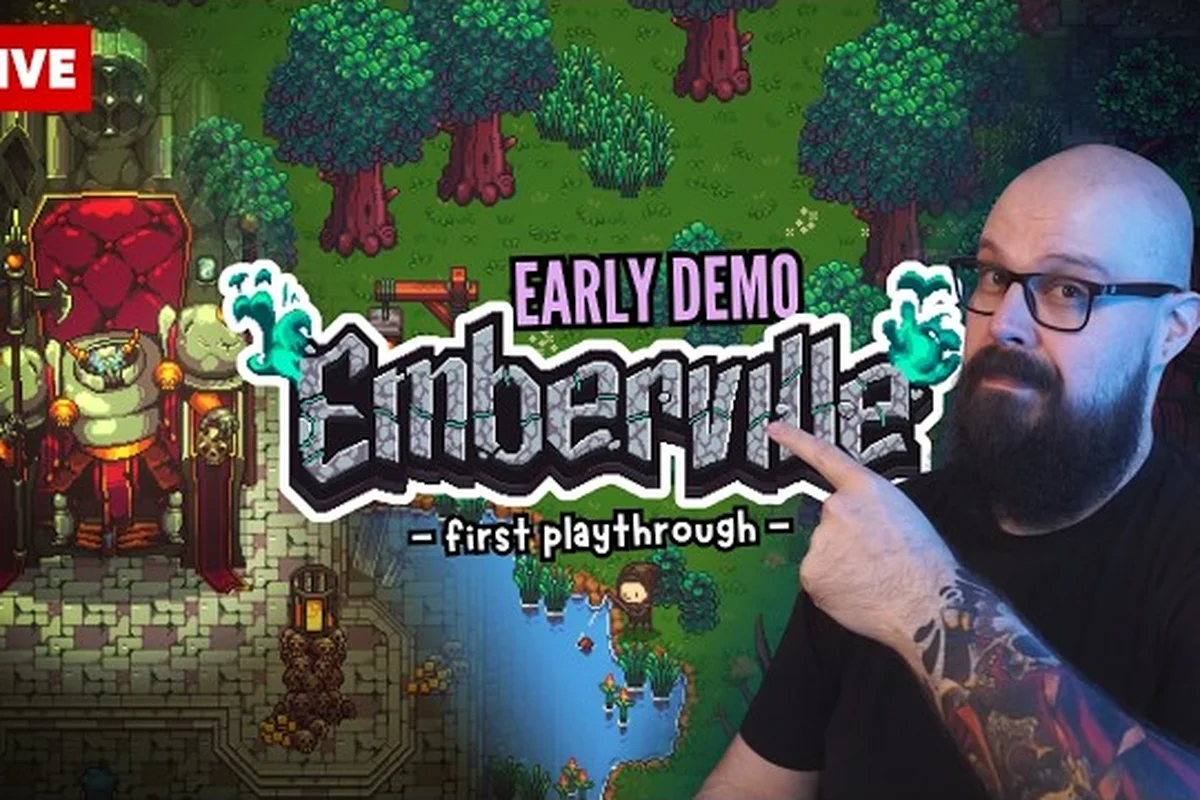
Emberville zones split the game into two connected worlds: the underground Vitromotus dungeon, where the player awakens with no memories, and the overworld settlement of Kymia, which you slowly rebuild above. Because every expedition drops you back into a different procedural slice of the Vitromotus, knowing how Emberville zones interconnect is the difference between a wasted run and a clean sweep of loot, lore, and rescued survivors.
The official Steam news hub confirms the loop: explore, battle, rescue, and rebuild. Below is a full map of how the Emberville dungeons, the surface estate, and the hidden lore beats fit together during Early Access and beyond.
How Emberville Zones Are Structured
The game world is divided into two macro-regions, and every Emberville zone sits inside one of them. The Vitromotus is a massive, ever-changing magical dungeon where death no longer lasts; Kymia is the surface settlement you rebuild floor by floor. Players move between the two by returning to the estate portal, which respawns them at the edge of a new procedural Vitromotus slice each time.
| Zone Family | Location Type | Resets on Death | Core Activity | Surface Connection |
|---|---|---|---|---|
| Vitromotus | Procedural dungeon | Yes (no death penalty) | Combat, looting, NPC rescue | One-way via portal |
| Kymia | Persistent surface | No | Town building, crafting, dialogue | Permanent home base |
| Estate Grounds | Sub-zone of Kymia | No | Farm plots, decorations | Always accessible |
| Inter-zone Corridors | Transitional | No | Story cutscenes, fast travel | Connects Vitromotus to Kymia |
The estate sits at the hinge of all Emberville zones, which is why every dungeon run starts and ends there. According to community testing reported by players, the procedural generation pulls from a regional pool, so deeper Emberville exploration favors the same biomes until you unlock new depth tiers — a behavior that mirrors what the biome list for Emberville tracks in finer detail.
Why Two Regions Matter
Splitting the world between Vitromotus and Kymia is what gives Emberville zones their pacing. Combat-heavy dungeon crawling and slow, cozy town rebuilding pull in opposite emotional directions, and the developers at Cygnus Cross clearly designed the two regions to alternate. A typical play session drops you into the dungeon for loot, then sends you back to the surface to place a new building, unlock a villager, and craft gear for the next run.
This rhythm also explains why Emberville lore is split between two narrators: cryptic dungeon inscriptions speak to the Vitromotus's magical origin, while Kymia's NPCs react to your expeditions and gradually reveal what the surface used to be. The deeper the player descends, the more the two lore threads interlock.
Inside the Vitromotus: The Dungeon Half of Emberville Zones
The Vitromotus is the procedural heart of Emberville zones, and according to the Early Access launch coverage from Terminals, it is an enormous subterranean realm where magic keeps the dead coming back. Every descent is fresh, but the dungeon is divided into recognizable depth tiers and biome families that you can prepare for.
Depth Tiers and What Changes Per Floor
| Depth Tier | Approx. Player Level | Biome Pool | Loot Tier | Story Trigger |
|---|---|---|---|---|
| Upper Vitromotus | 1–5 | Verdant, Embered Halls | Common–Uncommon | First survivor rescued |
| Mid Vitromotus | 6–12 | Sunken Chapel, Hollow Atrium | Uncommon–Rare | First Vitromotus inscription |
| Deep Vitromotus | 13–20 | Gloom Caverns, Frost Antechamber | Rare–Epic | Mid-game lore reveal |
| Abyssal Vitromotus | 21+ | Crystal Vaults, Rift Sanctum | Epic–Legendary | Endgame lore convergence |
These tiers are reported by players rather than confirmed by an in-game UI, which is why the official store page stays vague on exact floor counts. What the Steam description does confirm is that each expedition contributes to rebuilding Kymia, so the Emberville dungeons never feel like a closed loop — every cleared room feeds the surface.
Boss Anchors and Dungeon Milestones
Each Vitromotus floor family has anchor bosses that gate progression and unlock new Emberville zones on the surface. The two-button combat plus weapon-bound combo system described in the Cygnus Cross gameplay update on Terminals means that learning each boss's pattern matters more than grinding levels. Players who chain weapon combos across multiple classes can burst bosses down before their enrage timers peak, which makes the Combo Chain a hidden but vital stat for serious explorers.
Inside Kymia: The Surface Half of Emberville Zones
Kymia is the rebuilding half of Emberville zones, and it is where most of the slow-burn progression happens. According to the publisher page on Terminals' official Emberville hub, players receive "a location to place buildings, decorations, farms, crafting equipment, and more" once they return to the surface with rescued villagers and gathered materials.
| Kymia Sub-Zone | Function | Unlock Condition | Daily Use |
|---|---|---|---|
| Town Square | NPC hub, quest board | Default | Story dialogue, vendor access |
| Crafting Yard | Blacksmith, alchemist, enchanter | First survivor rescued | Gear upgrades, consumables |
| Farm Plots | Food and reagent growth | After estate build quest | Passive resource income |
| Memorial Hall | Lore archive | Beat first Vitromotus boss | Lore recap, NPC memory walls |
| Portal Atrium | Fast travel to dungeon | Default | Run launcher, party setup |
How the Settlement Grows Over Time
Each rescued villager contributes a new function to one of the Kymia sub-zones, which is why the Emberville exploration loop always circles back to the surface. Players who want a deeper breakdown of the dungeon-to-surface handoff can cross-reference the enemy lore and area catalog to see which creatures drop which surface-building materials.
Because the estate is persistent and the Vitromotus is procedural, Kymia is the only place where long-term progression actually sticks. New Game+ resets some of that, but within a single playthrough, every wall you place and every NPC you rescue compounds into a stronger home base for the next expedition.
Exploration Routes Through Emberville Zones
Because the Vitromotus is procedural, there is no single "correct" path through Emberville zones. What experienced players have settled on is a layered route that mixes depth push, side exploration, and surface maintenance. The route below is a community-tested template that fits Early Access pacing.
| Route Phase | Approx. Time | Primary Goal | Surface Tasks in Parallel |
|---|---|---|---|
| Phase 1: Tutorial Slice | 30–60 min | First survivor, basic combos | Place first crafting bench |
| Phase 2: Depth Push | 2–3 hours | Reach Mid Vitromotus, unlock new biomes | Expand farm plots, recruit 2–3 NPCs |
| Phase 3: Lore Sweep | 1–2 hours | Read all inscriptions, clear side chambers | Build Memorial Hall, donate relics |
| Phase 4: Boss Farming | 2+ hours | Target specific boss anchors for class unlocks | Upgrade weapons, craft consumables |
| Phase 5: Convergence | 1 hour | Trigger endgame lore chain | Final estate build, story wrap |
The five-phase template above is intentionally modular, so you can re-enter at any checkpoint without invalidating earlier progress: depth-push progress in the Mid Vitromotus is retained across sessions, Memorial Hall donations stack into the Phase 3 lore counter, and weapon XP earned during Phase 2 boss carries directly into Phase 4 farming. The most common routing mistake is skipping the surface-maintenance column — players who ignore estate farm plots and NPC recruitment during a Phase 2 push typically return to Kymia under-stocked and lose 20–30 minutes per run re-establishing basics. Treat the table's time estimates as floors, not ceilings, and prioritize whichever side task unlocks your next weapon tier or survivor dialogue.
-
Always carry at least one stack of healing consumables before a depth push, because the deeper Emberville dungeons have less forgiving enemy density.
-
After every boss kill, return to Kymia and exhaust NPC dialogue — Emberville lore is gated behind rescued survivors, not just dungeon exploration.
-
Farm plots in the estate refill during dungeon runs, so time-intensive expeditions do not actually cost you surface resources.
-
Save the Crystal Vaults and Rift Sanctum biomes for after you have at least two weapon types leveled, because their enemies punish single-weapon builds.
Players who want a tighter starting checklist can layer the route above with the Emberville tips and tricks guide, which breaks down early-game resource management without retreading the world map. That companion guide pairs especially well with Phase 1 of the table — its "first 30 minutes" checklist maps directly to the Tutorial Slice column, covering survivor recruitment, the first combo unlock at the Vitromotus entrance, and the early-crafting-bench placement that the surface-tasks column only mentions in shorthand. Mid Vitromotus players get additional value from its biome-by-biome resource tables, and its Kymia estate rotation notes dovetail with the Phase 2 farm-plot reminders. Use both together when you want a checklist-driven run rather than the modular template.
Fast Travel and Cross-Zone Navigation
Kymia's Portal Atrium is the only confirmed fast travel hub, but the developers have hinted that deeper Emberville zones will eventually get their own anchor points. For now, every dungeon return funnels you through the Atrium, which is by design: it keeps the rebuilding loop front of mind and prevents the game from feeling like a pure dungeon crawler. If you want to streamline quest flow on the surface side, the villager quest walkthrough lines up neatly with the Phase 3 lore sweep.
Emberville Lore: How the Two Halves Connect
The Emberville lore arc is the connective tissue between Vitromotus and Kymia, and it is one of the strongest reasons to explore every Emberville zone rather than speed-running the boss path. The story opens with the player awakening with no memory inside the Vitromotus, which immediately raises the question of who built the dungeon and why death has no permanence there. The answer is parceled out across two channels: dungeon inscriptions and rescued survivor dialogue.
| Lore Channel | Where to Find It | Story Weight | Frequency |
|---|---|---|---|
| Vitromotus inscriptions | Hidden rooms, altar walls | High — explains dungeon origin | Every 2–3 floors |
| Survivor memory lines | Town Square, Memorial Hall | Medium — explains world history | Once per NPC |
| Estate item flavor text | Crafting Yard, storage | Low — flavor only | Common |
| Boss death dialogue | End of boss arenas | High — main plot progression | Once per anchor boss |
The interplay between these channels is what makes Emberville lore feel layered rather than linear. Two players can clear the same boss and walk away with different pieces of the story, depending on which Emberville zones they explored and in what order. According to the official Steam description, the broader arc ties into "rebuilding the ruined town of Emberville," which gives the lore a long-term direction even in Early Access.
The Vitromotus Question
The most consistent mystery running through Emberville lore is the Vitromotus itself: a magical dungeon where death does not last, created by an unknown force, and somehow connected to a ruined town on the surface. The deeper you push, the more the Vitromotus feels like an engineered prison or a failed experiment rather than a natural cave system. Inscriptions in the Gloom Caverns and Crystal Vaults biomes are the most likely places to land major lore beats, based on community reports from the Early Access beta. For the navigable side of that history, the Emberville ruins map guide charts the tunnels, monster nests, and waypoints.
The Kymia Question
On the surface, the Kymia half of Emberville lore asks a parallel question: who lived here before the player arrived, and why was the town ruined? Rescued survivors each carry a fragment — a relative lost to the dungeon, a building that burned, a leader who vanished into the Vitromotus and never returned. Layered together, those fragments sketch a town that collapsed because of the same magical force that now protects the player from permanent death.
If you want a structured entry point before you start a fresh run, the Emberville beginner guide walks through the prologue demo flow, breaks down how the Kymia and Vitromotus lore channels diverge in their opening act, and previews the first in-game moment where both channels surface a shared fragment about the town's collapse. Reading that guide first helps new players catch the subtle background dialogue and environmental details in the Kymia starting hub that foreshadow the Vitromotus incursion, rather than missing them and piecing the connection together only after reaching the mid-game dungeon gates.
Emberville Zones Cheat Sheet
Below is a compact reference table for the Emberville zones covered above, including the two main region groupings — the four-tier Vitromotus biomes (Upper, Mid, Deep, Abyssal) and the five Kymia sub-zones (Town Square, Crafting Yard, Farm Plots, Memorial Hall, Portal Atrium). Use it as a quick lookup while planning a run, then dive into the linked guides for the specific mechanic or region you need, such as the fire DOT routing through Embered Halls or the reflective-damage breakpoints in Crystal Vaults.
| Zone Name | Type | Region | Key Mechanic | Lore Hook |
|---|---|---|---|---|
| Verdant | Biome | Upper Vitromotus | Basic enemy density | First survivor rescued |
| Embered Halls | Biome | Upper Vitromotus | Fire DOT enemies | Inscription #1 |
| Sunken Chapel | Biome | Mid Vitromotus | Puzzles, mini-boss | Faith-related inscription |
| Hollow Atrium | Biome | Mid Vitromotus | Vertical combat rooms | Noble house fragment |
| Gloom Caverns | Biome | Deep Vitromotus | Blind enemies, dark zones | Magical origin hint |
| Frost Antechamber | Biome | Deep Vitromotus | Slow debuff, ice walls | Frozen expedition log |
| Crystal Vaults | Biome | Abyssal Vitromotus | Reflect damage enemies | Major lore reveal |
| Rift Sanctum | Biome | Abyssal Vitromotus | Reality-bending arenas | Endgame convergence |
| Town Square | Sub-zone | Kymia | Quest board, dialogue | NPC memory lines |
| Crafting Yard | Sub-zone | Kymia | Gear upgrades | Blacksmith backstory |
| Farm Plots | Sub-zone | Kymia | Passive resource growth | Survivor gratitude |
| Memorial Hall | Sub-zone | Kymia | Lore archive | Full timeline unlock |
| Portal Atrium | Sub-zone | Kymia | Run launcher | Estate origin story |
Frequently Asked Questions
How many Emberville zones are there in Early Access?
Emberville zones in Early Access cover two macro-regions and roughly eight biome families inside the Vitromotus, plus five Kymia sub-zones. Because the Vitromotus is procedural, exact room counts vary per run, but the biome pool and depth tiers remain consistent.
What is the difference between the Vitromotus and Kymia in Emberville?
The Vitromotus is the procedural magical dungeon where combat, looting, and exploration happen, while Kymia is the persistent overworld town that the player rebuilds. Every dungeon run starts and ends in Kymia, which is where rescued survivors, crafted gear, and long-term progression live.
Do Emberville dungeons reset every time you enter?
Yes, the Vitromotus resets on each descent because it is procedurally generated, and death inside the dungeon does not carry a permanent penalty. Kymia and the estate, by contrast, are persistent and never reset, so all NPC rescues, building placement, and crafting progress stick.
Where is the best place to start Emberville lore hunting?
The most efficient starting point is the Verdant and Embered Halls biomes in the Upper Vitromotus, because they contain the earliest inscriptions and the first rescuable survivor. After that, clearing every hidden side room in each new biome is the fastest way to collect Emberville lore fragments without backtracking.
Can you fast travel between Emberville zones?
Fast travel in Early Access is limited to returning from the Vitromotus to the Portal Atrium in Kymia. There is no confirmed mid-dungeon fast travel yet, so planning a route that includes an exit point before pushing into the Abyssal Vitromotus is the safest approach.