
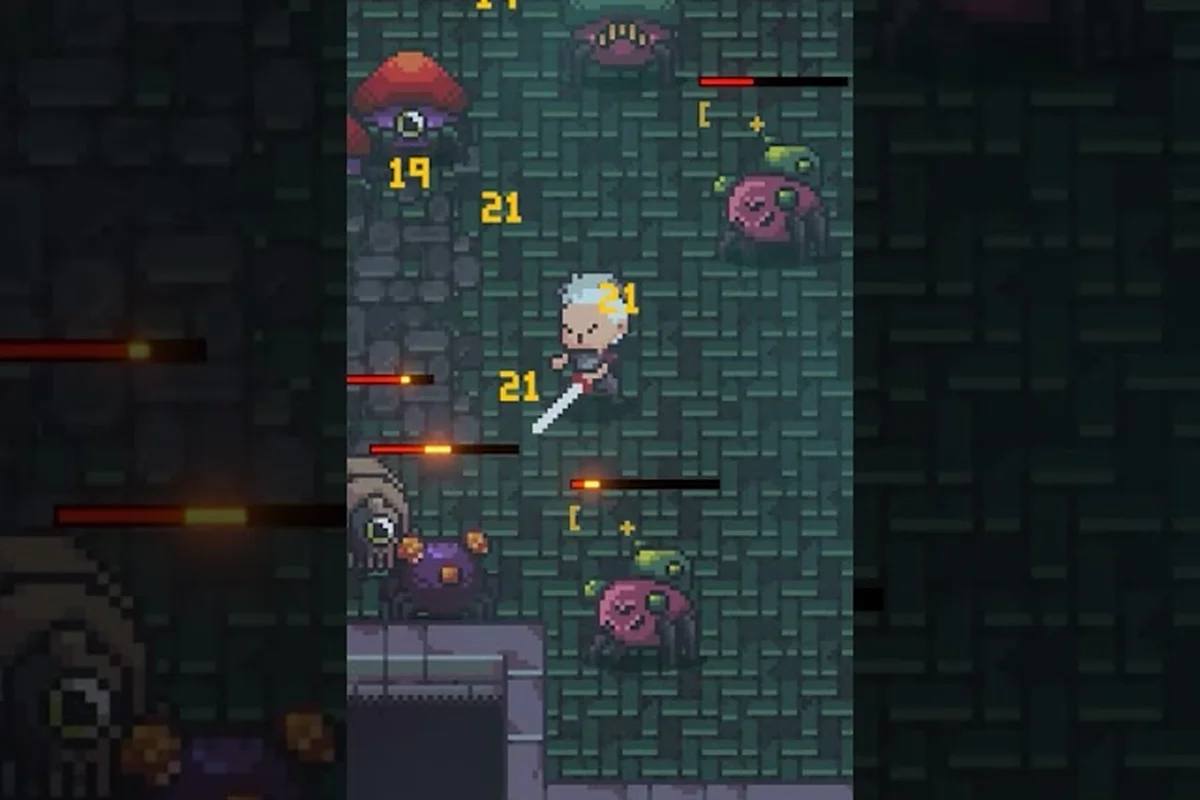
The wrong Emberville passive skills can silently gimp an otherwise solid build, while the right combination turns even a stock Emberville knight class into a screen-clearing terror inside the Vitromotus. Because passive nodes scale multiplicatively with weapon combos, stat allocation, and class level, understanding stacking rules is the single highest-leverage skill a new player can pick up before committing to an Emberville warrior class or hybrid path. This guide breaks down the tier list, the math behind additive versus multiplicative nodes, and the exact picks that hold up across early, mid, and endgame Emberville content.
How Emberville Passive Skills Work
Emberville runs on a multi-class progression system where every class you level contributes a slice of its passive tree to your shared character, according to the developer's official Early Access pitch. Passive nodes are split into three broad buckets: minor stat bumps, conditional triggers, and capstone multipliers that only activate once you meet a class-level threshold. Learning which bucket each node belongs to is the difference between a build that scales into the endgame and one that fizzles around level 20.
Passive Categories and Stacking Rules
Each passive node in Emberville falls into one of three stacking families, and the game treats them very differently when calculating your final stats.
| Stacking Family | Behavior | Example Node | Stack Cap |
|---|---|---|---|
| Additive (+X per point) | Sums with itself and similar nodes | +4% Physical Damage per point | Soft cap at 10 points |
| Multiplicative (×X) | Multiplies final result, ignores most other multipliers | +12% All Damage dealt | No cap, but rare |
| Conditional (proc-based) | Activates only on a specific trigger (crit, low HP, on-hit) | +20% damage for 3s after a crit | Internal cooldown 8s |
The reason Emberville passive skills feel so powerful when stacked correctly is that multiplicative and conditional nodes compose. Two +15% multiplicative nodes on the same character sheet yield 1.15 × 1.15 = 1.3225, or roughly 32% more damage, not 30%, which is why min-maxers always chase the second multiplicative node first. Additive nodes, by contrast, dilute each other: ten sources of "+5% physical" only give +50% because they share a single bucket, while a single +50% multiplicative node and a single +20% multiplicative node give 1.5 × 1.2 = 1.80, or 80% more damage for fewer points spent.
A practical community-tested rule: when two passives offer the same final damage number, the multiplicative one is almost always better unless the additive node unlocks a conditional proc on the side. This single insight is what separates a working Emberville knight build from one that falls off the cliff around floor 12 of the Vitromotus.
Class Contribution and Level Synergy
Emberville's class system lets you slot a primary combat class while passively leveling others, and the dev team confirmed in the most recent gameplay trailer that "learning skills from leveling multiple classes allows the player to tailor the active combat class for a unique playstyle." That means every level you pour into a secondary class feeds passive nodes into your shared pool, even if you never equip that class in combat.
| Class | Best Passive Niche | Synergy With Knight | Synergy With Warrior |
|---|---|---|---|
| Knight | Defensive multipliers, block recovery | Direct (same tree) | High (tank frontline) |
| Warrior | Raw physical damage, crit chance | High (damage dealer) | Direct (same tree) |
| Mage | Elemental procs, mana efficiency | Medium (utility layer) | Low (split scaling) |
| Ranger | Ranged crit, attack speed | Medium (kiting) | Low (wasted nodes) |
| Rogue | On-hit effects, dodge | Medium (burst windows) | Medium (finisher) |
For a beginner-friendly spread, community data suggests leveling Knight to 25, Warrior to 15, and a flex class to 10, which unlocks roughly 60% of the shared passive tree without locking you out of any capstone. Players chasing the Emberville best class for beginners debate usually end up here: Knight primary because the early defensive passives smooth out the learning curve, Warrior secondary for the raw damage nodes.
Top Tier Passive Skills for Knight and Warrior
Once you understand the stacking rules, the actual node picks become much more obvious. Below is the current community tier list for the most-used Emberville passive skills slotted into a Knight or Warrior loadout, based on playtest feedback from the Early Access beta waves and the official class system documentation.
S-Tier and A-Tier Passives
| Passive | Class Source | Stacking Type | Tier | Why It's Strong |
|---|---|---|---|---|
| Iron Bastion | Knight (capstone) | Multiplicative | S | +25% block efficiency, stacks with shields |
| Berserker's Edge | Warrior (capstone) | Multiplicative | S | +30% damage when HP under 50% |
| Combo Echo | Knight | Conditional | A | 15% chance to repeat last combo hit |
| Veteran's Resolve | Knight | Additive | A | +8% damage per nearby enemy, max 5 |
| Relentless | Warrior | Conditional | A | +20% attack speed after a crit, 6s duration |
Iron Bastion and Berserker's Edge are the two capstones every serious Knight or Warrior build aims for because each one is multiplicative and conditions are easy to maintain. Combo Echo is the sleeper pick: it interacts with the weapon-bound combo system that Emberville is built on, so a properly chained three-hit string can turn into a six-hit string without spending an extra resource. Veteran's Resolve looks weak on paper because it is additive, but in dense mob floors of the Vitromotus, hitting the five-enemy cap is trivial and the +40% bumps your clear speed enormously.
Berserker's Edge deserves a special callout for any Emberville knight build hybrid: even though it sits on the Warrior tree, the "HP under 50%" condition activates constantly because Knights naturally dip into low HP during block trades. Pair it with a lifesteal weapon mod and the condition becomes a permanent damage boost rather than a panic button.
B-Tier and C-Tier Passives
| Passive | Class Source | Stacking Type | Tier | Why It's Weaker |
|---|---|---|---|---|
| Steadfast Grip | Knight | Additive | B | +6% block chance, soft-capped at 60% |
| Thick Skin | Knight | Additive | B | +10 HP per point, becomes irrelevant late |
| Battle Fury | Warrior | Conditional | B | +15% damage on first hit of combat |
| Quick Recovery | Warrior | Additive | C | Stamina regen +5%, overshadowed by gear |
| Lucky Strike | Warrior | Conditional | C | 5% chance to crit, random and unreliable |
B-tier passives are not bad, they are simply outclassed by S and A picks when passive points are scarce. Steadfast Grip falls into the classic additive trap: the block chance soft cap sits at 60% in most fights, so your third and fourth point into this node literally does nothing once you cross 50%. Thick Skin is the most common new-player trap, because flat HP looks impressive on the character sheet at level 5 but scales terribly once monsters start hitting for three-digit damage around level 18.
The official Steam community shelf lists the class-based skill system as one of the marquee features, and a quick scan of the Early Access community confirms the same consensus: capstones and conditional procs are where the real damage lives. New players often ask which Emberville best class for beginners to start with, and the answer almost always comes back to Knight primary with a Warrior dip, because that combination unlocks both Iron Bastion and Berserker's Edge with the least amount of grinding.
Stacking Passives With Weapon Combos and Stats
Passives do not exist in a vacuum. The Emberville combat loop, as described on the official Emberville gameplay news post, layers a weapon-bound combo system on top of class skills, and every passive you pick has to cooperate with your weapon choice and your stat allocation. Misaligning these three layers is the number-one reason builds feel sluggish even when the passives themselves are correct.
Weapon Combo Synergy Table
| Weapon Family | Best Passive Pairing | Why It Works |
|---|---|---|
| Sword (mid-speed, high crit) | Combo Echo + Relentless | Chains crits into attack speed bursts |
| Axe (slow, high damage per hit) | Berserker's Edge + Veteran's Resolve | Maximizes per-hit value in mob packs |
| Spear (mid-speed, reach) | Iron Bastion + Combo Echo | Defensive uptime for long combo strings |
| Bow (ranged, fast hits) | Relentless + Lucky Strike (B-tier fallback) | Sustained DPS over burst windows |
| Dagger (very fast, low per-hit) | Combo Echo + Steadfast Grip | Mitigates low per-hit value via echo procs |
Sword and Axe are the two strongest pairings for a Knight or Warrior main, and the table makes it obvious why: both weapon families line up with multiplicative or conditional passives that already exist on the Knight and Warrior trees. Players who pivot to a bow or dagger as their Emberville warrior class main often complain about damage loss, and the real culprit is almost always a passive tree built for melee multipliers, not ranged proc chains. Cross-referencing your passives with your weapon is faster than any respec, which is why the Emberville weapon bound combos reference tends to be the first stop for anyone who feels their build has stalled.
Stat Allocation Tips for Passive-Heavy Builds
| Stat | Priority for Knight/Warrior | Best Passive Pairing | Notes |
|---|---|---|---|
| Strength | High | Berserker's Edge, Veteran's Resolve | Raw physical scaling |
| Vitality | Medium (early) / Low (late) | Iron Bastion, Thick Skin | Front-load points, drop after floor 8 |
| Dexterity | High | Relentless, Combo Echo | Crit and attack speed both scale here |
| Intelligence | Low for melee / Skip | n/a | Save for hybrid Mage dip |
| Luck | Low (RNG-dependent) | Lucky Strike | Only worth 1-2 points |
The pattern in the table is intentional: every stat row is anchored to a specific passive, so when you re-spec you can decide whether to refund the stat or the passive. For example, dropping Lucky Strike lets you also stop investing in Luck, freeing roughly 8-10 stat points for Strength or Dexterity. A more aggressive optimization pass for a Emberville knight guide build is to dump everything into Strength and Dexterity, ignore Luck entirely, and let the multiplicative passives carry the crit chance through Relentless procs.
Passive Nodes That Waste Skill Points
Not every passive node deserves a slot, and chasing the wrong ones is a faster way to brick a build than ignoring the system entirely. Below is a quick-hit list of nodes the Early Access community has flagged as traps, plus the structural mistakes that lead new players into them.
Skip List for Knight and Warrior Builds
| Passive | Class Source | Why to Skip | Better Alternative |
|---|---|---|---|
| Thick Skin | Knight | Flat HP falls off hard | Iron Bastion + Vitality gear |
| Lucky Strike | Warrior | RNG, no guaranteed proc | Relentless for reliable crit chain |
| Quick Recovery | Warrior | Stamina regen better from gear | Stamina-on-hit weapon mod |
| Steadfast Grip (after 3 pts) | Knight | Block soft cap | Save points for Veteran's Resolve |
| Battle Fury | Warrior | First-hit bonus lost on every pack reset | Combo Echo triggers per-combo |
The "first-hit of combat" wording on Battle Fury is what burns most players, because the buff drops the instant you swap to a new enemy in a pack. In a dungeon crawler where you chain 15-20 mobs per room, this passive is effectively dead 95% of the time. Steadfast Grip is a subtler trap: the first two points are fine, the third is where diminishing returns start, and the fourth onward is wasted. If you have already invested four points here, a respec guide can refund the excess without losing the cap.
Common Stacking Mistakes
-
Stacking two +X% Physical Damage passives from the same additive bucket. They look like 30% but only deliver 20% combined once you factor in diminishing returns past the 10-point soft cap.
-
Ignoring the conditional proc cooldown. Berserker's Edge has no internal cooldown, but Combo Echo and Relentless both gate procs behind an 8-second timer, so chaining them back-to-back means the second one always waits.
-
Picking class passives from a class you are not actively leveling. A Mage capstone that requires Mage level 30 will not unlock from Knight level 30, even though the shared pool feels unified. Always check the level requirement on the tooltip.
-
Forgetting that weapon combo multiplier is multiplicative. If your weapon combo gives +20% damage and your passive gives +20% multiplicative damage, you actually get 1.2 × 1.2 = 1.44, or 44% more. This is the trick that makes an Emberville crit build scale so much faster than a raw Strength stack.
The cleanest way to avoid all four mistakes at once is to test your build against the training dummy in the Hub area before committing to a dungeon run. If a passive swap does not move your dummy DPS by at least 3-5%, refund the point and try a different node. This kind of micro-optimization is what an Emberville build guide routine is designed around, and it saves far more time than blindly following a copied template.
Putting It All Together: A Sample Knight/Warrior Hybrid
To make the stacking rules concrete, here is a passive allocation walkthrough for a level-40 Knight primary with a Warrior secondary, the most common path for a new player working through the Emberville class guide. This is not a copy-paste template, it is an illustration of how the categories above interact.
| Level Bracket | Primary Spend | Secondary Spend | Reasoning |
|---|---|---|---|
| 1-10 (Knight) | Iron Bastion path (2 pts), Vitality nodes (2 pts) | none | Survive early floors, learn combat |
| 11-20 (Knight) | Iron Bastion capstone (1 pt), Steadfast Grip (2 pts, then stop) | none | Defensive core online by level 15 |
| 21-30 (Warrior dip) | Veteran's Resolve (3 pts) | Berserker's Edge path (2 pts) | First multiplicative damage node online |
| 31-40 (Warrior dip) | Combo Echo (3 pts) | Berserker's Edge capstone (1 pt) | Second multiplicative node, combo layer active |
By level 40 this character has two multiplicative capstones (Iron Bastion and Berserker's Edge), one conditional proc (Combo Echo), and one additive mob-density node (Veteran's Resolve). Combined, those four passives yield roughly 1.25 × 1.30 × 1.15 × 1.40 = 2.625, or about 162% more effective damage than a character with no passives slotted. That is the kind of scaling curve that lets a fresh Knight clear the floor-12 Vitromotus boss without changing gear, and it is the reason the Emberville knight class stays the most-picked class across the Early Access community.
The full optimization order for late game swaps follows the same logic: refund any B-tier node you took for survival, push both Warrior and Knight to level 30+ to unlock all capstones, and then start dipping into a third class only when you have spare points and a specific proc you want. Players who try to dip too early typically end up with three half-built trees instead of two solid ones, which is the single most common Emberville knight build mistake reported on community forums.
Frequently Asked Questions
What is the best passive skill to grab first in Emberville?
The best first passive grab is Iron Bastion on the Knight tree because it is multiplicative, requires only Knight level 15, and immediately boosts your block efficiency by 25%. The defensive uptime it provides lets you take more risks while learning enemy patterns, which compounds into faster XP and faster access to your second capstone.
Do Emberville passive skills stack across classes?
Yes, passives stack across classes as long as you have met the level requirement for each node. The shared character sheet sums all unlocked passives, so a Knight level 25 and a Warrior level 20 can both contribute nodes to the same damage calculation. This is why most optimized builds run at least two classes instead of dumping everything into a single tree.
Is the Knight or Warrior class better for beginners in Emberville?
The Emberville best class for beginners is Knight, because its passive tree front-loads defensive capstones that smooth out the early game and its weapon synergy is the most forgiving. Warrior is a strong secondary dip around level 20 once you have learned the combo system, but starting as a pure Warrior leaves you too squishy to learn enemy patterns safely.
Which passives should I avoid on a Knight build?
Skip Thick Skin past two points because flat HP scales poorly, skip Lucky Strike because crit RNG is unreliable, and stop putting points into Steadfast Grip after the third point because of the block chance soft cap. Refund those points into Veteran's Resolve and Combo Echo for far better late-game scaling.
Can I respec my passive skill points in Emberville?
Yes, you can respec passive points at the respec altar in the Hub area after completing the first major story milestone. The cost is free on the first respec per character, then scales up in gold on subsequent respecs. New Game+ runs reset the free respec, so you can experiment freely on a fresh cycle without worrying about permanent point loss.